South Florida's Unique Concrete Challenges
Concrete cracks in South Florida differently than in other parts of the country. Our sandy soil, high water table, intense heat, and salt air create a perfect storm of stress on concrete surfaces. If you own property in Kendall, Homestead, or North Miami, you've probably noticed cracks appearing in driveways or patios that seemed perfect a few years ago.
The good news is that most cracking is preventable with proper installation and maintenance. Understanding the specific causes in our region helps you make better decisions about your concrete project and catch problems early.
Sandy Soil Shifting
South Florida's foundation sits on sand and limestone, not the compacted clay or rock you find up north. This sandy subbase moves and shifts, especially when water content changes. During our dry season, the soil compacts. During rainy season, moisture loosens it again. This constant movement creates stress on concrete surfaces above.
In Kendall and Homestead, where you're on limestone and coral rock substrate, the issue is compounded. Limestone slowly dissolves from water movement, creating voids. Concrete sitting above these voids eventually settles and cracks.
Prevention starts with proper base preparation. Your concrete contractor must compact the sandy subbase thoroughly before pouring. Skipping this step or rushing it almost guarantees cracking problems within a few years.
High Water Table
South Florida's water table is one of the highest in the country. In many areas, you're only three to five feet below the surface before hitting groundwater. This constant moisture underneath your concrete works its way up through capillary action.
When moisture moves up through the concrete, it carries salts and minerals with it. These deposits crystallize on the surface, causing spalling, staining, and weakening of the concrete itself. In coastal areas, salt spray accelerates this process dramatically.
The solution is proper drainage and sealing. Your concrete should slope away from your home and toward storm drains. We design slabs with drainage considerations from day one. Sealing then protects the surface from water intrusion.
Heat Expansion and Contraction
Concrete expands when it heats up and contracts when it cools. In South Florida, surface temperatures regularly exceed 120 degrees Fahrenheit on sunny days. That expansion and contraction happens daily, creating stress in the material.
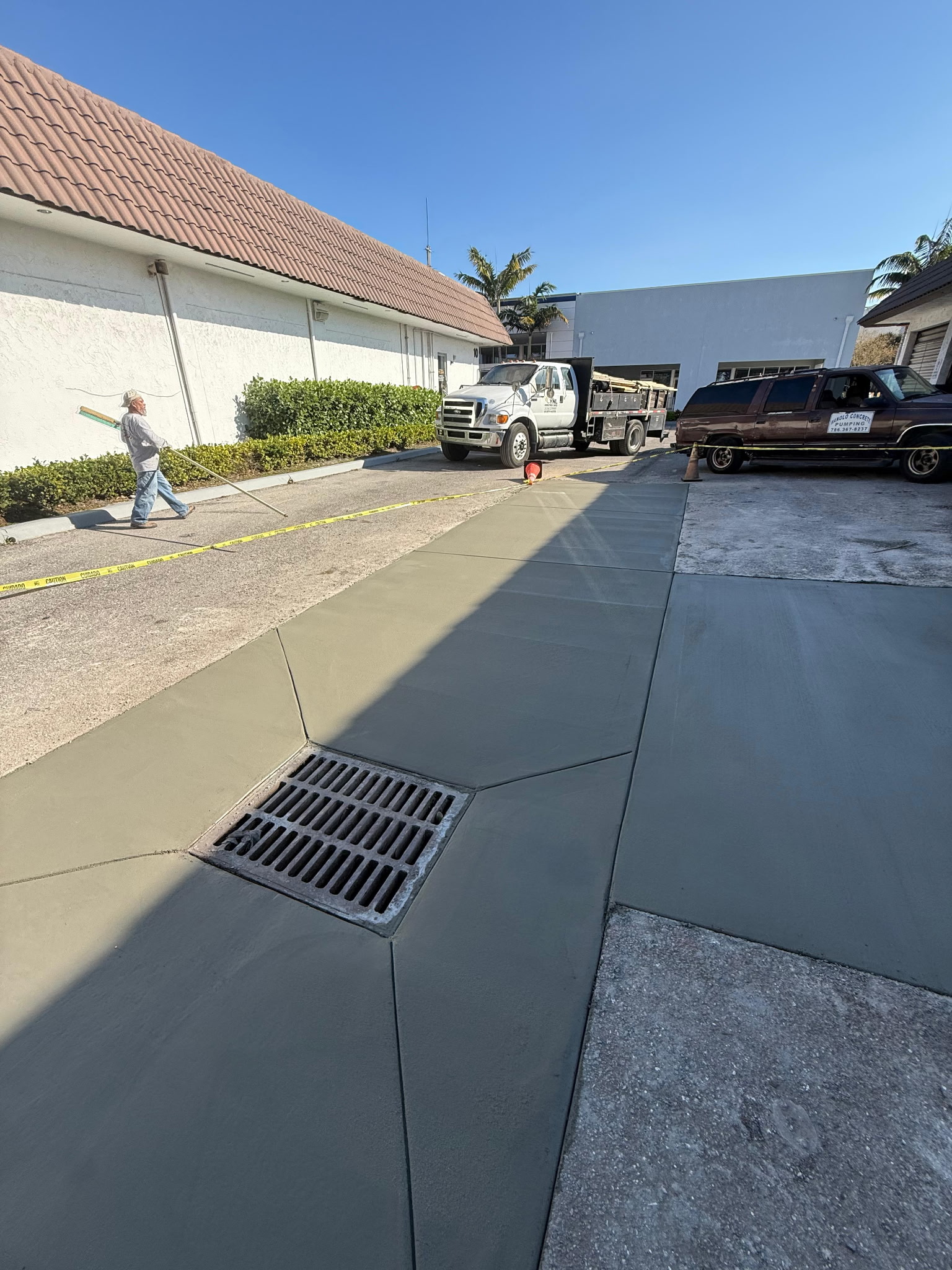
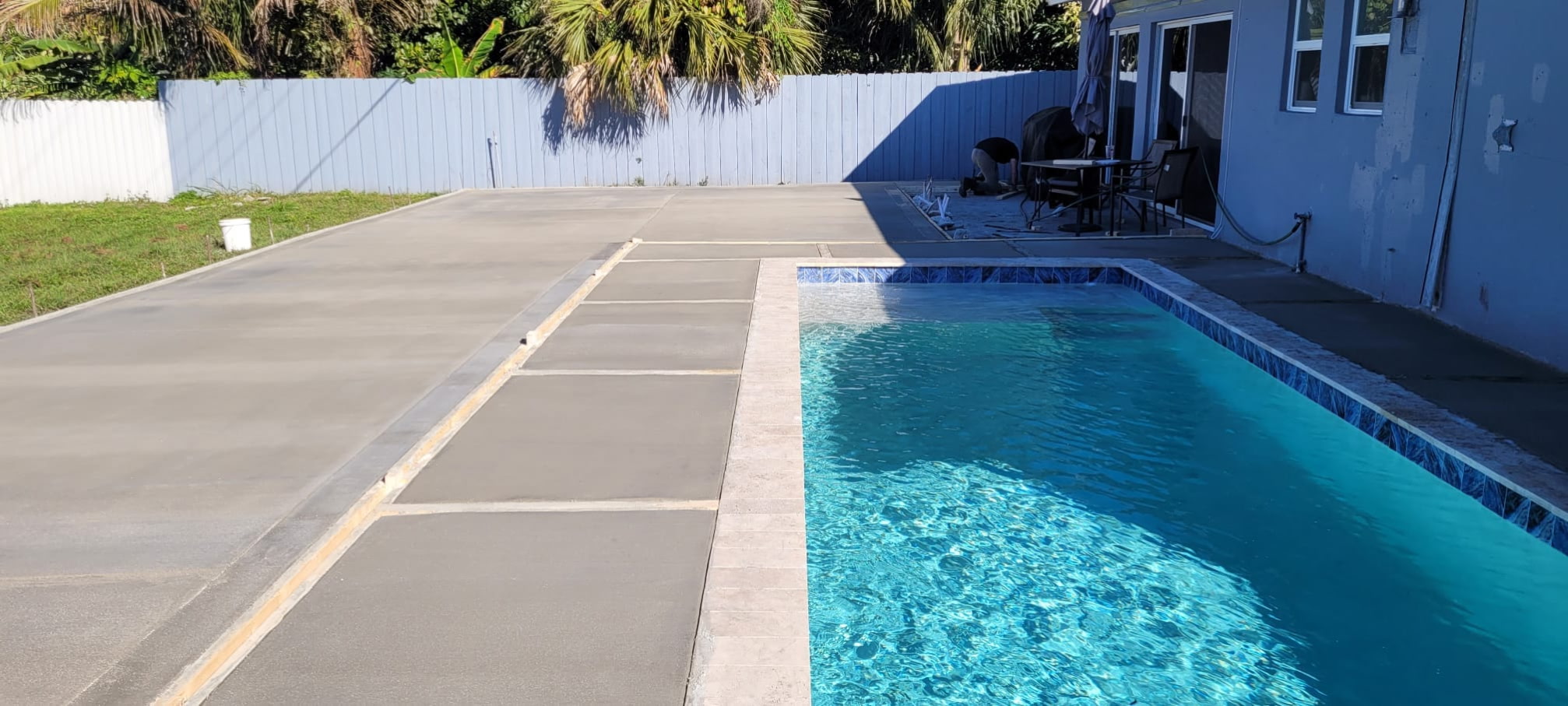
Without control joints, the concrete cracks randomly as it tries to move. With proper control joints placed every eight to twelve feet, the concrete can expand and contract in a controlled way. The joints crack in a predictable pattern, keeping major structural cracks away.
Control joints look like thin lines across your driveway or patio. They're not defects, they're smart engineering. Most homeowners never notice them, but they save your concrete from major cracking.
Tree Roots and Underground Movement
South Florida's mature trees are beautiful, but their roots cause concrete problems. Roots seek moisture and nutrients, so they grow toward and under concrete surfaces. As roots expand, they push the concrete up, creating trip hazards and cracks.
In Homestead and North Miami, where older neighborhoods have large established trees, root damage is common. Remove or cut back tree roots near your driveway if possible. If major trees are nearby, plan on concrete damage being a long-term possibility and budget for repairs.
When installing new concrete near trees, we sometimes install root barriers to direct roots away from the slab. This isn't a perfect solution, but it helps limit damage.
Improper Curing in Florida's Humidity
Concrete gains strength during the curing process. If the surface dries too fast while the interior is still soft, stress cracks develop. In South Florida's heat and humidity, curing requires deliberate attention.
The best contractors mist the concrete regularly during the first seven days and cover it with plastic sheeting to prevent rapid drying. The concrete should cure slowly and evenly. Rushing the cure process or skipping this step leads to surface cracking and reduced strength.
If your concrete cracks appear in the first few weeks after installation, improper curing is usually the culprit. This is why hiring an experienced South Florida contractor matters.
Salt Air Degradation
Living near the coast has trade-offs. The salt air in Miami-Dade coastal areas corrodes concrete reinforcement, especially rebar. Corroded rebar expands, pushing on the concrete and causing spalling and cracking.
Using corrosion-resistant rebar or fiber reinforcement in coastal projects is essential. Sealing is also more critical because it slows salt water intrusion into the concrete.
Prevention Strategies That Work
Control Joints
Install control joints every eight to twelve feet. These intentional joints allow the concrete to move without developing random cracks. They're standard practice in proper concrete installation.
Proper Rebar and Mesh
Use the right reinforcement. In South Florida, especially near coast, corrosion-resistant reinforcement is worth the extra cost. Proper spacing and placement of reinforcement prevents major cracking.
Right Concrete Mix
Concrete strength matters. Specify at least 4000 PSI concrete for driveways and patios in South Florida. Higher strength concrete resists cracking better than weaker mixes. It costs slightly more but prevents future damage.
Professional Curing
Don't rush it. Proper curing for seven days with moisture and covering prevents surface cracking. Hire contractors who take curing seriously, not ones who let you drive on it after two or three days.
Sealing
A good sealer protects your concrete from moisture, salt, and staining. Reseal every two to three years in South Florida. This simple maintenance extends your concrete's life dramatically.
Catch Cracks Early
Small cracks are easier and cheaper to repair than large ones. Walk your driveway or patio quarterly and look for new cracks. Hairline cracks can be sealed before water gets in and causes larger damage.
If cracks appear suddenly or grow quickly, contact a professional. It might indicate a base preparation problem or something more serious that needs attention.
Your South Florida Concrete Deserves Better
Cracking isn't inevitable in South Florida. The concrete that lasts thirty years is built right from the start with proper base prep, control joints, good reinforcement, and professional curing. Then it's maintained with regular sealing and prompt repair of minor issues.
If you're planning a concrete project in Kendall, Homestead, or North Miami, prioritize an experienced local contractor. We know South Florida's specific challenges. Call YNL Concrete at (754) 208-1893 for Fort Lauderdale area or (786) 902-7200 for Miami. Let's build concrete that lasts.