Stamped Concrete vs Pavers: The South Florida Showdown
If you're planning a patio, driveway, or outdoor space in Miami, Miami Beach, or Coral Gables, you've probably looked at both stamped concrete and pavers. They both look beautiful, but they're very different products with very different maintenance needs. In South Florida's intense heat and salty air, choosing the right one matters.
We work with homeowners and business owners all across South Florida, and we see this decision come up constantly. Let's break down the real differences so you can choose what's best for your property.
Cost Comparison
Stamped concrete typically costs $10 to $18 per square foot installed, while pavers range from $15 to $30 or more per square foot. On a 400 square foot patio, that's the difference between $4,000 to $7,200 for stamped concrete versus $6,000 to $12,000 for pavers. Stamped concrete is the cheaper option upfront.
That initial savings is important, but it's not the whole story. Over 10 years, the total cost of ownership can shift depending on how much maintenance you're willing to do.
Durability in South Florida's Climate
Here's where South Florida's unique conditions matter. Our salt air corrodes pavers, especially lower-quality ones. The constant UV exposure bleaches colors on both materials, but pavers fade more noticeably. Stamped concrete handles UV better because it's sealed, and quality sealers provide UV protection.
Both materials expand and contract in our heat, but they react differently. Pavers can shift and settle in our sandy soil. Stamped concrete, when properly installed on a solid base, doesn't shift as much. In Weston and other areas with sandy, loose soil, this difference becomes obvious within a few years.
Hurricanes and salt spray are part of life in South Florida. Salt is tough on pavers. Stamped concrete with proper sealing resists salt damage much better. If you're in Miami Beach or Coral Gables close to the ocean, salt air will age pavers faster than stamped concrete.
Maintenance and Upkeep
Pavers require regular maintenance that most homeowners underestimate. You need to clean them regularly to prevent mold and mildew growth in our humid climate. Every 2 to 3 years, pavers should be re-sealed and the joints re-sanded. Individual pavers crack or break from settling and need replacement. Over time, this adds up fast.
Stamped concrete requires sealing every 2 to 3 years, just like pavers. But you're sealing a single monolithic surface, not individual units. If a sealed and well-maintained stamped concrete surface cracks, it's usually repairable with epoxy filler. Stamped concrete generally requires less hands-on maintenance.
Both need regular cleaning, especially in our rainy, humid South Florida climate. Both can develop mold and mildew if not cleaned periodically. If you're not willing to maintain your outdoor surface, budget for professional cleaning every year or two.
Appearance and Customization
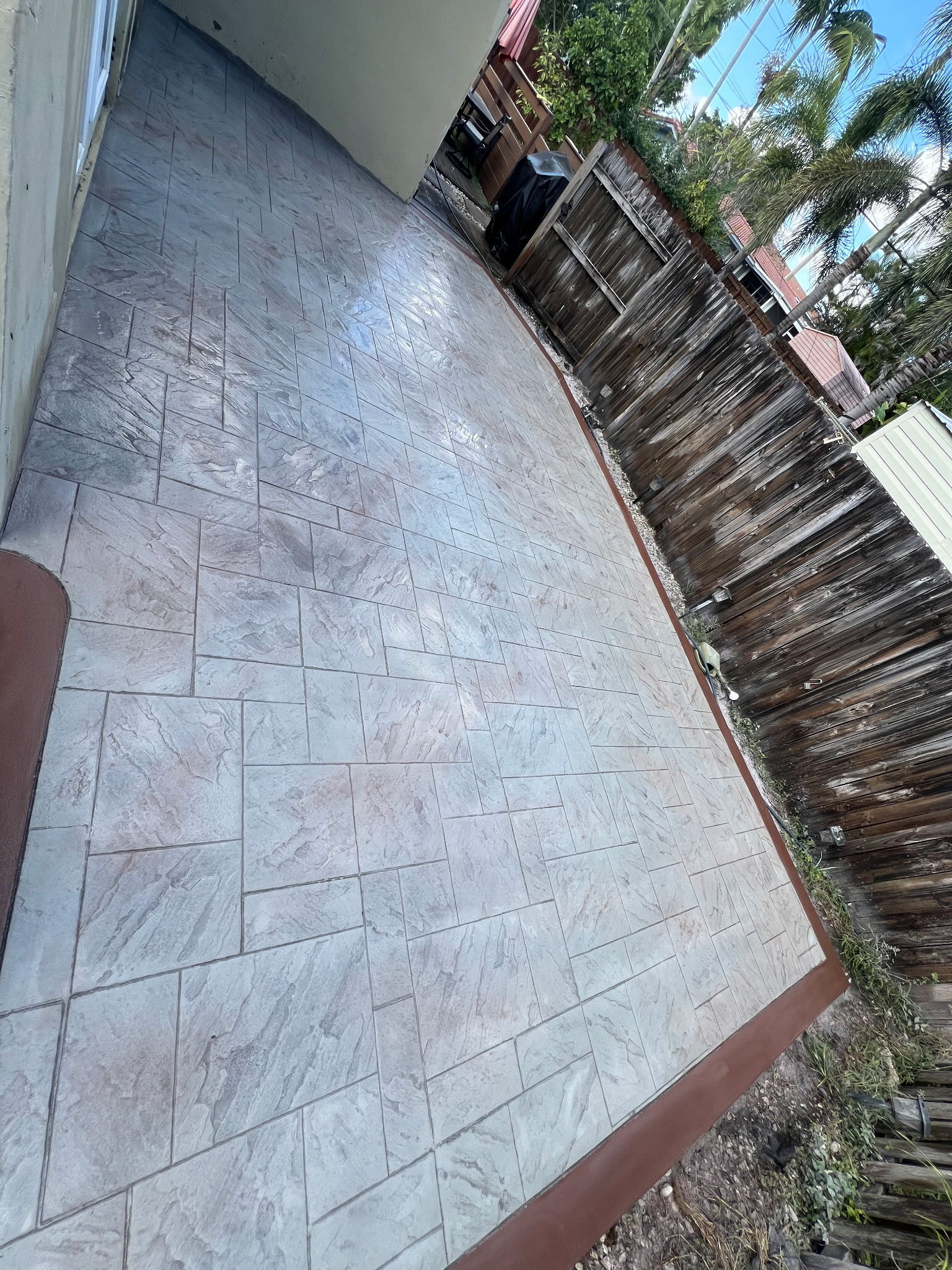
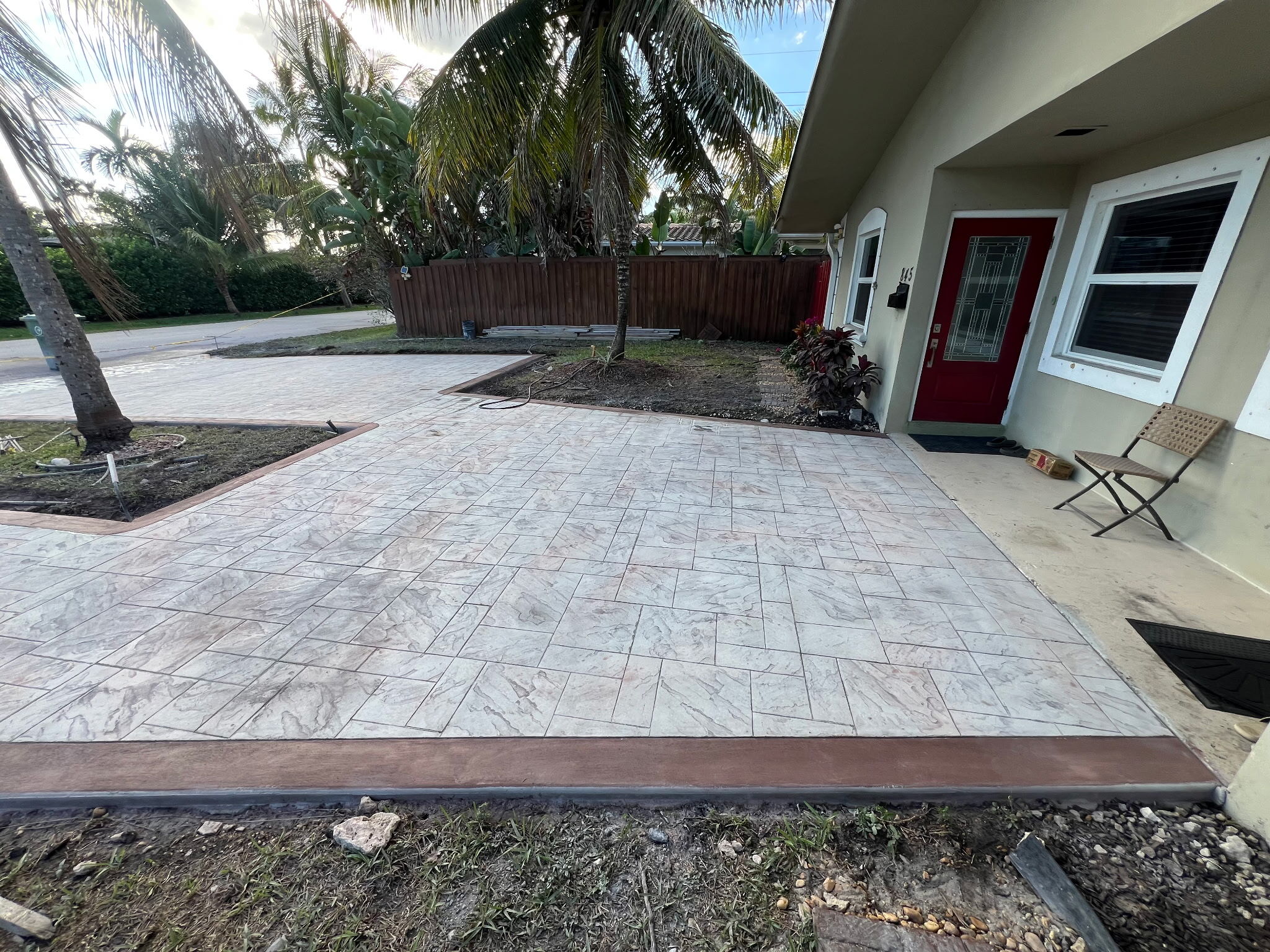
Stamped concrete can look like stone, brick, slate, or tile. The patterns and colors are endless. Once installed, the look is permanent. If you want to change it later, you'd need to add a concrete overlay or replace it entirely. Colors stay consistent because they're built into the concrete mix.
Pavers offer more flexibility. Individual pavers can be replaced if one breaks or you want a different look. You can create more intricate patterns with different colored pavers. If a paver fades unevenly or cracks, you can replace just that one. That flexibility appeals to some homeowners.
In Coral Gables and other upscale neighborhoods, we see both used successfully. Stamped concrete can mimic high-end finishes at a fraction of the cost. Pavers have a classic look that works in any setting.
Heat and Barefoot Comfort
This matters a lot for pool decks and outdoor entertainment areas. Stamped concrete absorbs and retains heat, getting very hot underfoot in South Florida's intense sun. A dark-colored stamped concrete deck can be uncomfortably hot on bare feet on a 95-degree day. Light colors and cool-deck coatings help, but it's still hotter than pavers.
Pavers, especially lighter colored ones, stay cooler because of the air gaps between them. On the same hot day, a paver deck is noticeably more comfortable barefoot. If you're building a pool deck in Fort Lauderdale or Miami Beach where people will be barefoot constantly, pavers might be the better choice for comfort.
That said, stamped concrete with a cool-deck coating or light sealer can make a huge difference. Some contractors offer reflective sealers specifically designed to keep surfaces cooler.
Drainage and Water Management
Stamped concrete is monolithic, which means water runs off it quickly if properly sloped. That's good for preventing standing water but means water runs off onto surrounding areas. If your patio runs toward your house, proper slope is critical.
Pavers have gaps between units that allow water to drain through. This is better for areas with poor drainage or where you want water to permeate into the ground. In areas that flood easily, permeable pavers might be the smart choice. However, those sand-filled gaps can wash out over time, especially in our sandy South Florida soil with heavy rain and hurricane-force winds.
Settling and Ground Movement Issues
South Florida's sandy soil loves to shift, especially in areas like Weston and Plantation. Pavers settle unevenly because individual units can sink at different rates. After a few years, you'll notice high spots and low spots that make the surface uneven and trap water. Resetting pavers is expensive.
Stamped concrete, when properly installed on a solid, compacted base, doesn't shift as noticeably. It can crack if ground movement is severe, but it won't develop the uneven settling that pavers do. In areas with poor soil conditions, stamped concrete is more forgiving.
Which Should You Choose?
Choose stamped concrete if you want lower upfront costs, easier long-term maintenance, better salt-air resistance, and a consistent appearance. It's ideal for driveways, entries, and most patios. In Miami-Dade and Broward counties, most homeowners find stamped concrete the better value.
Choose pavers if you want maximum design flexibility, cooler surface temperatures, better water permeability, and don't mind ongoing maintenance. Pavers work well for pool decks and areas where you might want to make changes later. If you're in a neighborhood like Miami Beach where classic aesthetics matter and you're willing to maintain them, pavers can be worth it.
In reality, many homeowners in Coral Gables and the Miami area choose stamped concrete because it simply makes more sense long-term in our climate. It resists salt air better, doesn't shift in sandy soil as much, and costs less to maintain.
Quality Installation Matters Most
Honestly, the difference between a 20-year driveway and a 10-year driveway comes down to installation quality more than material choice. A properly installed stamped concrete surface with good base prep, drainage, and sealing lasts decades. Poorly installed concrete fails fast. Same with pavers.
Choose a contractor who understands South Florida's unique soil, drainage, and climate challenges. Ask about their base preparation process. Ask what kind of sealer they use. Ask how they handle our sandy soil. These details matter more than the glossy photos of finished projects.
Let's Help You Decide
We install both stamped concrete and pavers in Weston, Miami Beach, Coral Gables, and throughout South Florida. If you're trying to decide which is right for your project, let's talk it through. Give us a call at (754) 208-1893 in Fort Lauderdale or (786) 902-7200 in Miami. We'll walk your property, explain the pros and cons for your specific situation, and help you make the right choice.